
Am I at risk of a Brain Aneurysm?
What is a brain aneurysm?
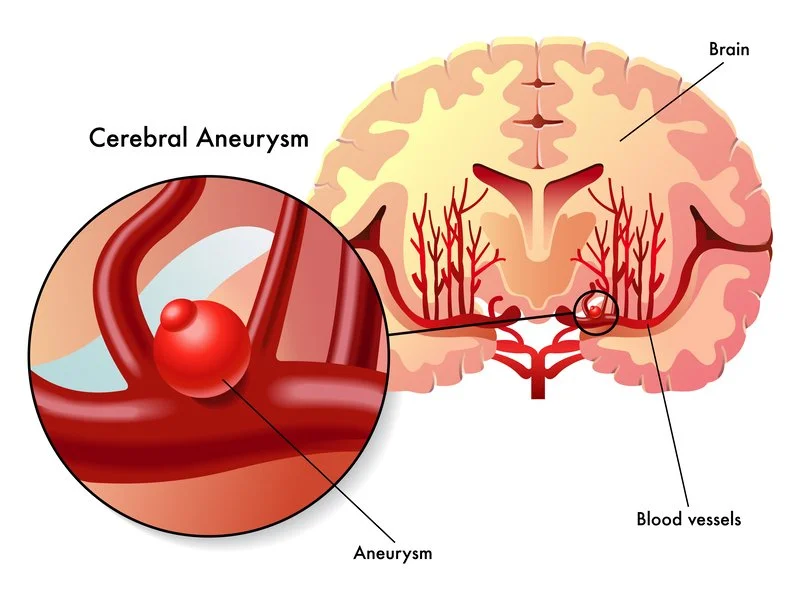
An aneurysm is a weak part or bulge in a blood vessel. They can occur anywhere in the body, but a cerebral aneurysm is one that occurs in or around the brain.
Why are they bad?
Many aneurysms are small and the people who have them have no symptoms at all. Some of these people might find out they have one when they are getting a scan for a completely different reason.
The reason we worry about cerebral aneurysms is because as the blood continues to pump around the body, the bulge fills with more blood stretching the blood vessel walls thinner meaning that they can rupture and cause a stroke and this is a life-threatening emergency.
What are the symptoms of cerebral aneurysms?
Most brain aneurysms are small and do not cause any symptoms, however, a large aneurysm can put pressure on adjacent structures such as nerves and cause symptoms such as pain, blurred vision or weakness on one side of the face.
Sometimes, a brain aneurysm may leak a small amount of blood for a few days or even weeks before it ruptures, causing a headache.
The first sign of a ruptured aneurysm is a severe headache often described as the worse headache someone has ever experienced. The two main areas where the blood will spill are the space between the brain and the skull and the area between the brain and the tissue that protects it. This can result in permanent brain damage, seizures or even death if not treated quickly.
Other symptoms of a ruptured aneurysm other than the headache include:
Nausea and vomiting
Loss of consciousness
Stiff neck
Blurred vision
Sensitivity to light
Seizures
Confusion
Weakness or numbness
Dropping eyelid and a dilated pupil
Pain above and behind the eye
Who gets brain aneurysms?
Brain aneurysms are most common between the ages of 30 – 69 years
They are more common in women
If you have already been diagnosed with a cerebral aneurysm there is a 10 – 30% chance you will have an aneurysm somewhere else in the body
Approx. 6% of the population have an unruptured cerebral aneurysm
Sometimes people can be born with a brain aneurysm but there are some inherited factors that may increase the risk of developing aneurysms. These include:
Polycystic kidney disease
Marfan’s syndrome
Having a first-degree relative who has had a brain aneurysm
Vascular Ehlers-Danlos syndrome
Co-arctation of the aorta
Lifestyle factors which can weaken your arteries and increase your risk of aneurysm development include:
Smoking
High blood pressure
Drug use. e.g. cocaine
Excessive alcohol use
Lifestyle factors which can increase the risk of rupture of an aneurysm rupture:
Stress or a sudden burst of anger or strong emotion
Physical straining such as lifting something heavy
Untreated high blood pressure
Age over 70 years
Previous rupture of an aneurysm
Treatment of an aneurysm
If you or a loved one has any of the above symptoms, call an ambulance or seek urgent medical attention. Time is critical in this situation.
The aneurysm will usually be diagnosed with a CT (computed tomography) or MRI (magnetic resonance imaging) scan of the brain.
Occasionally, a cerebral angiogram is performed. In this type of scan, a tiny tube is inserted into an artery in the brain and a dye is injected. This gives a good picture of the brain blood vessels and may detect an aneurysm.
If the aneurysm has not ruptured, then treatment options will depend on how big the aneurysm is, where it is in the brain and the risk of rupture of the aneurysm. You may be offered medical treatment to lower blood pressure and have regular scans. If the risk of rupture is deemed high, a neurosurgeon might suggest putting a metal clip over the aneurysm, so that it closes.
If the aneurysm has ruptured, urgent surgery will be needed and usually a metal clip is put over the aneurysm to prevent it bleeding again. Medical treatment will also be required to control your blood pressure, if your blood pressure is high.
Recovery after-surgery usually involves a team of people including a rehabilitation physician, a physiotherapist, an occupational therapist, and a speech pathologist. It can be a long road to full recovery.
Who should be screened for a cerebral aneurysm?
Family history
· Someone who has two first degree relatives with cerebral aneurysms.
Genetic conditions
· Ehlers-Danlos
· Polycystic kidney disease
· Marfan’s syndrome
Screening can be done with a brain MRI or CT scan.
TAKE HOME MESSAGES
There are some people who should be screened for cerebral aneurysms, but not everyone needs to be screened
Most cerebral aneurysms are small and asymptomatic.
There are many lifestyle interventions that reduce risk of development and rupture, such as maintaining blood pressure within a normal limit, not smoking or using excessive alcohol.
Anyone experiencing the worst headache of their life needs immediate emergency attention.
Other serious signs are nausea, vomiting, sensitivity to light neck stiffness, dilation of one pupil, or a drooping eyelid.
If you are ever unsure, if it is better to seek medical attention quickly rather than wait.